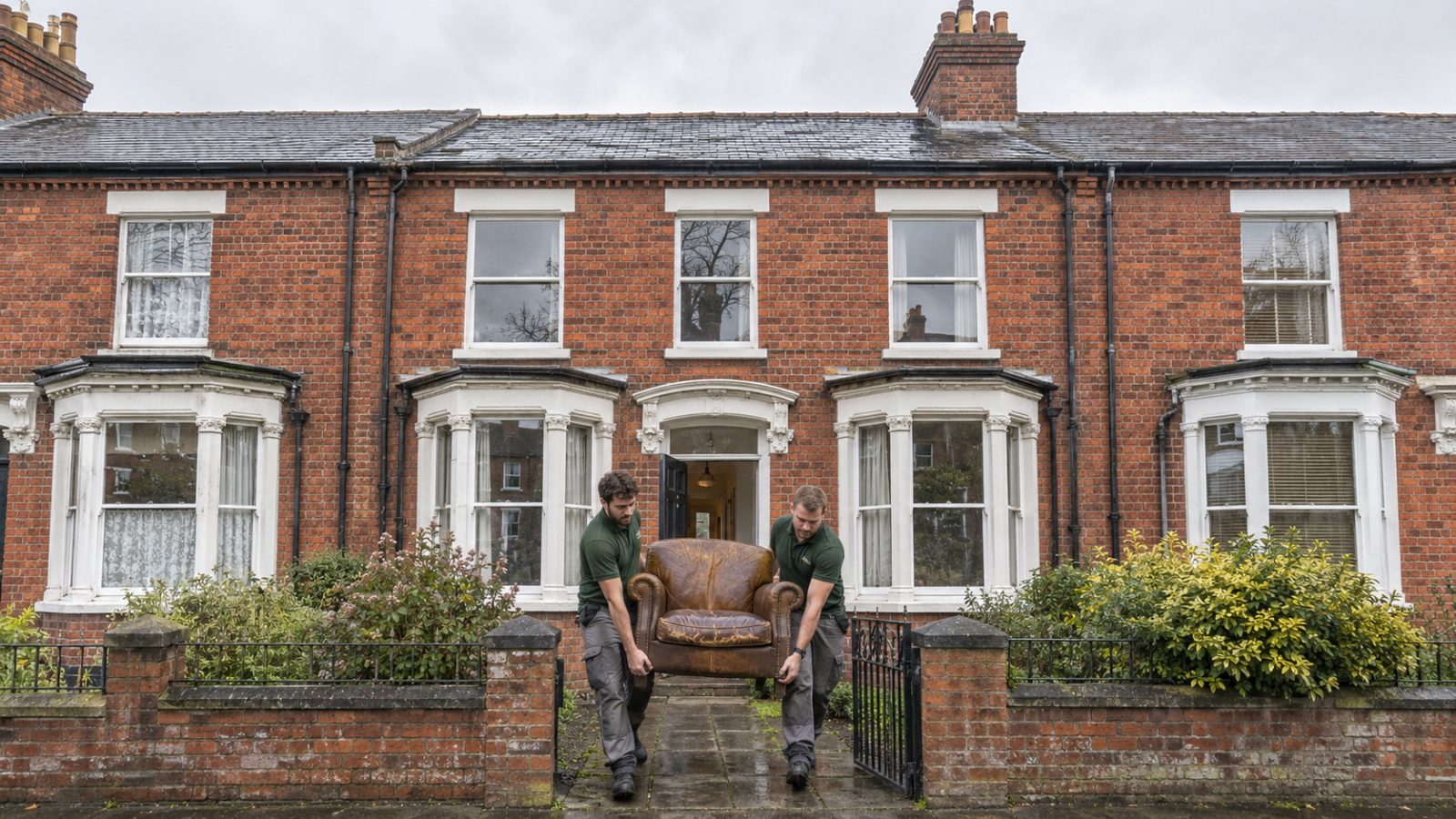
Local House Clearance Requests
House Clearance in Preston
Tell us what needs clearing and where. Get a Free Estimate
Clearing a house can feel like a bigger job than it first appears. Furniture needs moving, cupboards are full of forgotten belongings, and there may be years of possessions stored in the loft, garage or spare bedroom. Whether you are preparing a property for sale, dealing with an inherited home, moving out or simply making more space, finding someone to take care of the clearance is often the first practical step.
Preston House Clearance helps you make that step. We take house clearance requests from people in Preston and surrounding Lancashire towns, then pass the details to an independent local contractor. The contractor contacts you directly, discusses what needs removing, provides an estimate and carries out the agreed work. You can request help with anything from a few bulky items to the contents of an entire property.
Preston House Clearance is a request-handling service, not a company that carries out clearances itself. When you contact us, we pass your request to an independent local contractor. That contractor is responsible for contacting you, giving the estimate, agreeing the arrangements and completing the clearance. We provide the connection so you can move forward without having to explain the same job to several different people.
We focus on Preston because the city and its surrounding towns contain a wide range of homes, from Victorian terraces around the older streets to suburban semis in Fulwood, family houses in Penwortham and larger properties on the rural edges of Lancashire. Every clearance comes with different circumstances. Our approach is to keep the initial request straightforward, make space for the details that matter and avoid making assumptions about what a customer needs.
More about us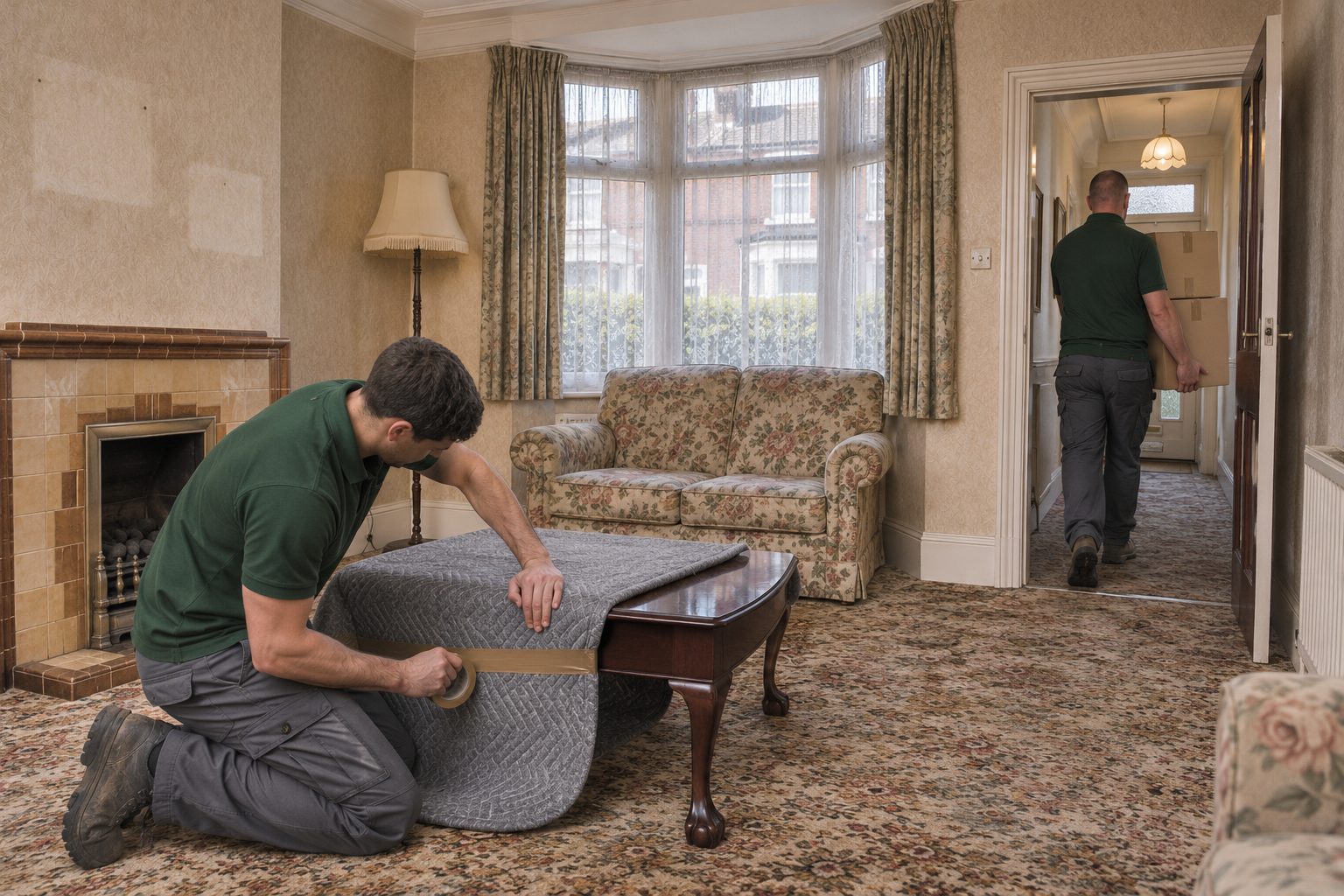
House clearance is not always about emptying every room. Some people need a complete property cleared before handing over the keys. Others want unwanted furniture removed while keeping most of their belongings. Probate clearance can require more careful decisions because family members may still be identifying possessions to retain. End of tenancy clearance often comes with a deadline, while a garage or loft clearance can involve awkward access and heavy items that have not moved for years. We accept requests for full house clearance, partial house clearance, probate house clearance, end of tenancy clearance, garage and loft clearance, and enquiries about selling unwanted house contents. Each service begins with an explanation of what needs attention, the type of property and any practical restrictions. We pass that information to an independent contractor who can assess the work. The contractor may need photographs or a visit before providing an estimate. If certain belongings might have resale value, that can also be mentioned when making the request. The important thing is to explain what should be removed, what must stay and whether there is a date that matters. You do not need to know exactly how the work should be organised before getting in touch.
Request help clearing the agreed contents of an entire house or flat.
Learn more →Clear selected rooms, furniture or unwanted belongings without emptying your entire home.
Learn more →Request considerate clearance arrangements for a property following a bereavement.
Learn more →Request removal of belongings left behind after a tenancy has ended.
Learn more →Request help removing stored belongings from garages, lofts and difficult storage spaces.
Learn more →Ask whether unwanted household furniture or contents may be suitable for purchase.
Learn more →Our request service covers Preston and surrounding communities across central Lancashire, South Ribble, Chorley and parts of the Fylde. These include Chorley, Leyland, Penwortham, Longridge, Fulwood, Lostock Hall, Bamber Bridge, Walton-le-Dale, Ashton-on-Ribble, Ingol, Ribbleton, Broughton, Goosnargh, Hutton, Longton, Tarleton, Euxton, Clayton-le-Woods, Kirkham and Freckleton.
Local conditions can make a real difference to a clearance. A terraced property near Preston city centre may have limited parking, while a detached house near Goosnargh could have several outbuildings and a longer approach. Some homes have steep stairs, narrow hallways or loft openings that affect how belongings can be moved. When you send a request, include the town, property type, access details and an approximate description of the contents. The contractor can then discuss the practical arrangements for your particular address.
See all service areas
You can explain the clearance in a single request. We pass the relevant details to an independent local contractor who can discuss the job directly with you.
Requests can cover an entire house, individual rooms, garages, lofts or belongings left after a tenancy. You can also ask about contents that might be suitable for purchase.
Preston and its neighbouring towns have very different property layouts. We encourage customers to include parking, access and storage details so the contractor has a useful starting point.
The independent contractor discusses the estimate, confirms what the work includes and performs the clearance. You can ask questions before deciding whether to proceed.
If you are unsure what should stay or go, explain that in your request. You can discuss sorting, retained possessions and any items needing special attention with the contractor.
Most people looking for house clearance in Preston want to understand what happens after they make contact. The process should begin with the property rather than a generic promise. A small ground-floor flat and a three-bedroom house with a full garage are completely different jobs, even if both owners describe them as a house clearance.
Start by telling us the property location, whether it is a house, flat or bungalow, and the main areas that need clearing. A brief description is useful. You might say that the lounge and bedrooms contain furniture, the kitchen cupboards are still full, and there are several boxes in the loft. Mention anything heavy or awkward, such as wardrobes, large appliances or furniture that may not fit easily through a doorway.
We pass the request to an independent local contractor. The contractor contacts you to establish the details and decide whether photographs are enough to assess the job or whether a visit would be more appropriate. An estimate can then be discussed directly with you. Any arrangements for dates, access, payment and the actual clearance are between you and the contractor.
Before the work begins, identify possessions that must not be removed. These could include documents, photographs, keys, jewellery, sentimental objects or furniture intended for another family member. If several people have an interest in the property, agree what is staying before the clearance starts. It is much easier to prevent a mistake than to recover something after disposal.
On the agreed day, the contractor deals with the items and areas covered by the arrangement. It is sensible to ask beforehand whether the work includes cupboards, carpets, sheds, external storage or any requested final tidying. Do not assume these things are included simply because the job is described as a full clearance.
Once the work is complete, walk through the accessible rooms where possible and check the agreed areas. Make sure retained possessions are accounted for, ask about any items that could not be removed and confirm how outstanding matters will be handled. A good clearance starts with specific information and finishes with a clear understanding of what has been done.
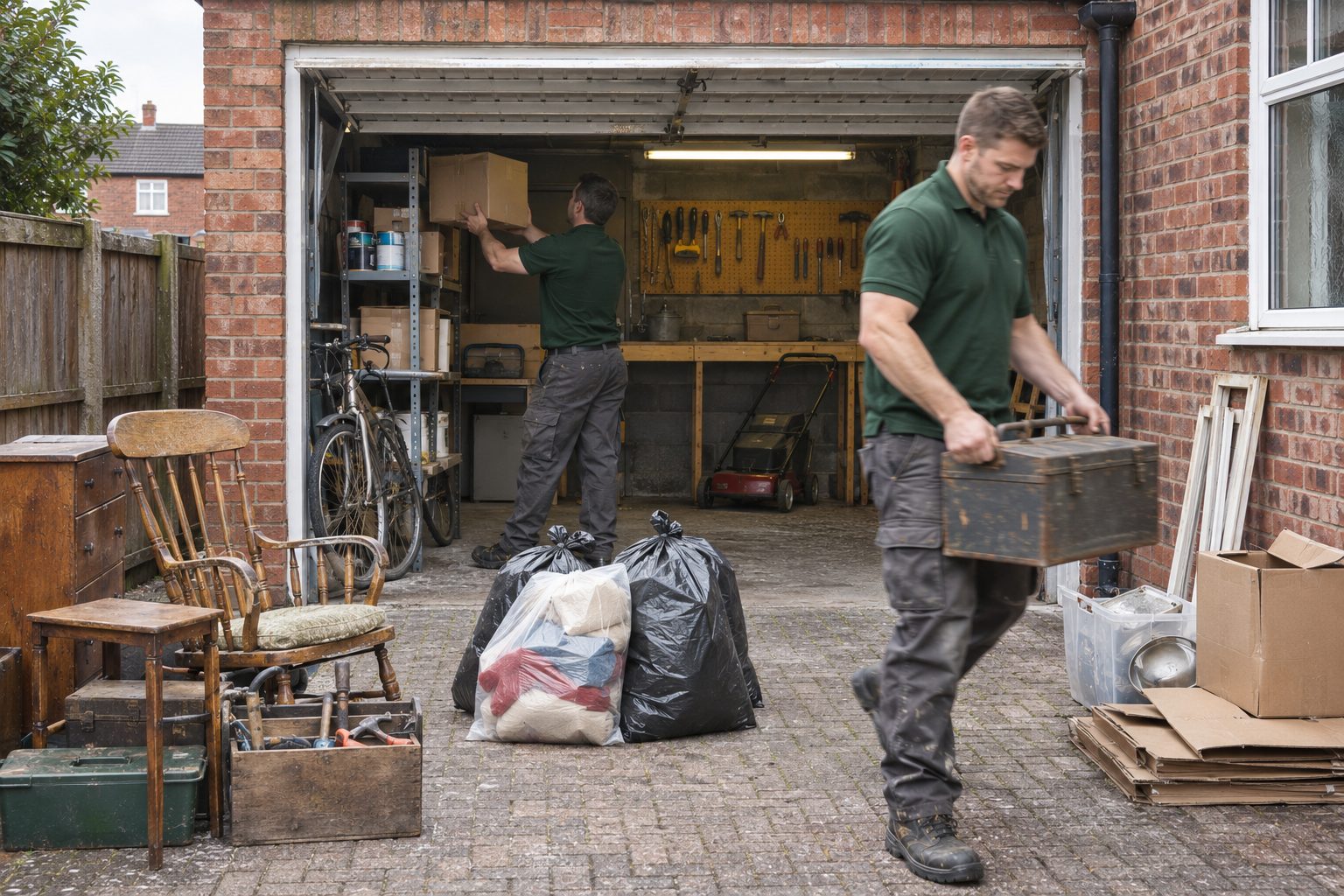
House clearance is often associated with major events, but there are plenty of ordinary reasons to arrange one. Sometimes a property has simply reached the point where individual trips to the recycling centre are no longer practical. Large furniture may need dismantling, awkward items may be too heavy to move safely, and sorting everything into separate car loads can take far longer than expected.
Moving house is one common trigger. A family preparing to leave a long-occupied home may discover that the loft contains possessions from several previous moves. The garage might hold broken garden equipment, old decorating materials and furniture that was kept just in case. If those items are not coming to the new address, arranging a clearance can make the moving process easier to plan.
Another situation involves an empty property. A house may need clearing after a relative moves into supported accommodation or after a bereavement. These circumstances often require more than physical removal. Family members may need time to examine papers, identify valuables or decide which pieces of furniture should be kept. A clearance request can explain that the property is being sorted in stages rather than requiring everything to disappear at once.
Landlords and letting agents may need unwanted belongings removed after tenants have left. The first concern should be whether the items can lawfully be treated as abandoned and whether any required notices or procedures have been completed. The clearance itself should follow those decisions, not replace them.
There are also smaller, more manageable reasons. A homeowner might want to turn a cluttered spare bedroom into a usable room, make a garage suitable for parking or clear a loft before insulation work. Partial clearance can be a sensible alternative to emptying the whole property.
A useful sign that professional help may be worth discussing is when the amount of material, weight of furniture or difficulty of access makes the work challenging to organise independently. There is no need to wait for every room to be full. The right scope is simply the amount you need removed.
People understandably want to know the likely cost before agreeing to a house clearance. There is no meaningful single figure that fits every property, because the amount of work can vary substantially. An estimate should be based on the actual contents, access requirements and arrangements for the specific job, rather than the number of bedrooms alone.
Volume is a major consideration. A house with three bedrooms may contain very little furniture if it has already been partly emptied, while a smaller property could be filled with items in every cupboard and storage space. Garages, lofts, sheds and cellars can add considerably to the amount that needs handling. It helps to describe these separately instead of treating them as part of a general room count.
The type of contents also matters. Heavy wardrobes, large sofas, appliances and bulky cabinets may be more difficult to remove than boxes of lightweight belongings. Certain items can require specialist handling or separate disposal arrangements. If you know there are unusual materials, old chemicals, paints, tyres or potentially hazardous items, tell the contractor before work is agreed. Do not assume every item can be collected as part of an ordinary household clearance.
Access can change the work involved. Narrow terraced streets in parts of Preston, upper-floor flats, steep staircases and long distances from the doorway to a suitable loading position all deserve mention. Restricted parking may require careful planning. An accessible bungalow with a clear driveway presents different practical conditions from a flat above commercial premises.
Timing is another factor. A property that must be emptied before a completion date may offer less flexibility than one that can be cleared over a wider period. Tell the contractor about deadlines, but ask what is realistically possible rather than relying on a date that has not been confirmed.
Some belongings may have resale value, although that should never be assumed. The contractor can explain whether any items are of interest and whether this affects the proposed arrangement. The sensible approach is to request an itemised explanation of what is included, clarify possible exclusions and agree the estimate directly with the contractor before proceeding.

Preston contains a mixture of housing that makes local knowledge of the area useful when discussing a clearance. Older terraced streets, interwar semis, post-war estates, newer developments and converted flats all present different questions about furniture removal, parking and storage. A description that works for one property may be inadequate for another.
Around the older residential streets near the city centre, some homes have narrow passages, compact yards or cellars. Large furniture may need to be moved through tight hallways and doorways. It is worth checking whether a rear entrance is usable, whether there are steps between rooms and whether an item can be taken apart without damage to the property.
In Fulwood and parts of Ashton-on-Ribble, houses may have larger garages or additional storage that has accumulated over time. Those areas can involve a different kind of work from a straightforward single-room collection. A request that includes a garden shed, loft and several bedrooms gives the contractor a more accurate picture than one that mentions only the main living space.
Modern housing around the wider Preston area creates its own access considerations. Some developments have shared parking courts, designated bays or routes that are not suitable for larger collection vehicles. Flats may have communal entrances, lift restrictions or management rules. Customers should check any relevant access arrangements before agreeing a collection date.
Outside the urban area, the setting changes again. Homes near Broughton and Goosnargh may have longer drives, detached outbuildings or belongings stored in barns and workshops. These should be identified clearly because agricultural, commercial and household contents do not necessarily fall under the same arrangements.
Lancashire weather can also affect work involving outdoor storage. Damp cardboard boxes, weathered furniture and items left in open sheds may need different handling from dry indoor possessions. Photographs can help explain the condition of stored material, especially when the customer does not live at the property.
The most useful local detail is often very practical: where can the contractor park, how do they get inside, how many floors are involved and what exactly must be removed? Providing that information early helps the job be assessed on its real conditions.
Choosing someone to clear a property involves more than finding an estimate you can accept. The contractor will potentially be handling personal belongings, moving furniture through the home and making decisions about materials that need disposing of. It is worth asking a few questions before giving permission for work to begin.
First, establish the scope in writing where possible. A description such as clear the house can mean different things to different people. Ask whether drawers and cupboards will be emptied, whether furniture dismantling is included, and whether any carpets, curtains, electrical items or outdoor belongings are excluded. If the clearance is only partial, make sure retained items are identified clearly.
Next, discuss waste handling. In England, people arranging the removal of household waste should take reasonable steps to ensure it goes to an authorised person. You can ask the contractor about their waste carrier registration, intended disposal arrangements and any relevant paperwork. Registration details can be checked through the appropriate public register. Do not rely solely on a verbal statement that everything will be recycled.
Consider how the estimate has been prepared. Photographs may be sufficient for a modest job, but a heavily furnished property or complicated access might require closer assessment. Ask what could lead to a change in the agreed amount, how any additional work would be authorised and whether the estimate includes all the services you have requested.
Communication matters particularly with probate properties or houses being managed from a distance. Agree who has authority to approve the clearance, who will provide keys, and how the contractor should respond if personal documents or potentially valuable objects are found. Clear instructions help protect everyone involved.
Finally, ask about practical arrangements, including the proposed date, expected completion, access to neighbouring properties and whether someone needs to be present. Do not feel obliged to accept an estimate before you understand the work.
Preston House Clearance provides the starting point for an enquiry, while the independent contractor handles these job-specific discussions and the work itself. If you are ready to explain what needs clearing, send the property details and any questions you want the contractor to address.

A little preparation can make a house clearance much easier to manage, but it should not become another overwhelming job. You do not need to empty cupboards, dismantle every item or put everything into bags before asking for an estimate. The most important preparation is deciding what you want the outcome to be.
Begin with three broad categories: things to keep, things you would like someone else to receive and things that can be removed. If several relatives are involved, give everyone an opportunity to identify important belongings before the property is cleared. Photographs of rooms and larger objects can be helpful when people are making decisions remotely.
Set aside paperwork early. Bank correspondence, certificates, identification documents, photographs, property records and personal letters can easily be mixed with ordinary household clutter. Check drawers, bedside cabinets, filing boxes and the backs of cupboards. If a house has been unoccupied for a while, consider whether keys, remote controls, instruction books or equipment relating to the property should remain for its next occupant.
Where possible, make the intended clearance areas identifiable. You could label a bedroom that must remain untouched, gather retained items in a separate room or prepare a simple written list. Avoid using labels alone when the consequences of a mistake would be serious. Discuss those instructions directly with the contractor as well.
Check access and utilities. Is there enough light to see into the loft or cellar? Can internal doors open fully? Is the garage unlocked? If a property has no electricity, tell the contractor beforehand. Also mention fragile flooring, loose steps or other conditions that could affect safe movement through the building.
Think about neighbours and shared spaces. A clearance should not block communal hallways or create unnecessary obstruction on residential streets. Where parking is limited, it helps to discuss the available arrangements before a date is settled.
Once the contents, access and deadlines are reasonably clear, send us your request. The contractor can then decide what further information is needed and discuss the proposed work with you directly. A realistic plan, rather than a perfectly sorted house, is usually the best place to start.
Preston House Clearance does not do the house clearance work itself. When you call or send the form, we pass your request to an independent local contractor who covers your part of Lancashire. That contractor contacts you, gives you the estimate and does the work.
See what happens after you call
Yes. You can submit a request covering the rooms, cupboards and storage areas you want cleared. An independent contractor will discuss the contents, access and estimate with you before any work is agreed.
Not necessarily, but access and authorisation need to be agreed with the contractor. If you are managing the property remotely, explain who holds the keys and who can make decisions about the contents.
Yes, you can request a partial clearance or identify belongings that must stay during a larger job. Make the instructions clear before work begins and discuss the arrangements directly with the contractor.
Explain the number of rooms affected, the general type of belongings and whether access is restricted. Photographs can be useful, but there is no need to feel embarrassed about describing the condition honestly.
Ready to get the property moving towards its next chapter? Tell us what needs clearing and we will pass your request to an independent local contractor.
Free — no obligations